
Guide · Interior Detailing
Interior UV Protection: Saving Your Dash from the SC Sun
By Trent Sloan, Illustrious Mobile Detailing · Written from how we actually do the work in Charleston, SC.
Your dashboard is the most sun-punished surface in the car: it sits under the windshield in direct South Carolina sun, and UV plus heat dry out its vinyl or leather until it fades, then cracks. Protection is a system, not a product: a windshield shade when parked (the single biggest win), proper cleaning and a UV-protectant dressing on rhythm, and ceramic window tint at our studio for cars that live outside. The shiny dressings at the parts store mostly add glare and dust attraction. The guide below covers what actually protects a dash - and a steering wheel, door tops and seats - from the Lowcountry sun.
Key Takeaways
- Fade, dry, crack - the UV sequence never varies
- A sunshade beats every bottle: use it when parked
- Satin UV protectant on rhythm; never slick on the wheel
- Ceramic tint is the permanent protection layer
What UV does inside the cabin
Ultraviolet light breaks down the polymers and plasticizers in vinyl and dries the oils in leather. The sequence is always the same: color fades first (black goes gray, tan goes chalky), then the surface dries and loses flex, then cracks appear along the stress lines - dash tops, door panel tops, seat bolsters, steering wheel rim. Heat accelerates every step, and a parked Charleston car in July is a 140-degree UV chamber. The windshield blocks some UV but far from all, and the side glass blocks less. Cars that live outside in our service area age visibly faster inside than the same cars garaged - the sun is the whole difference.
The shade: cheapest protection that exists
A fitted windshield sunshade, used every time you park outside, cuts cabin temperature dramatically and blocks the direct UV that does most dash damage. It is unglamorous and it outperforms every bottled product. Pair it with parking choices - the shaded end of the lot, the garage when home - and you have done more for your interior than any dressing can. For convertibles and cars with light interiors, the shade is close to mandatory equipment in South Carolina. If your routine makes a shade unrealistic, the next layers matter more: protectant rhythm and tint.
Cleaning and protectant, done right
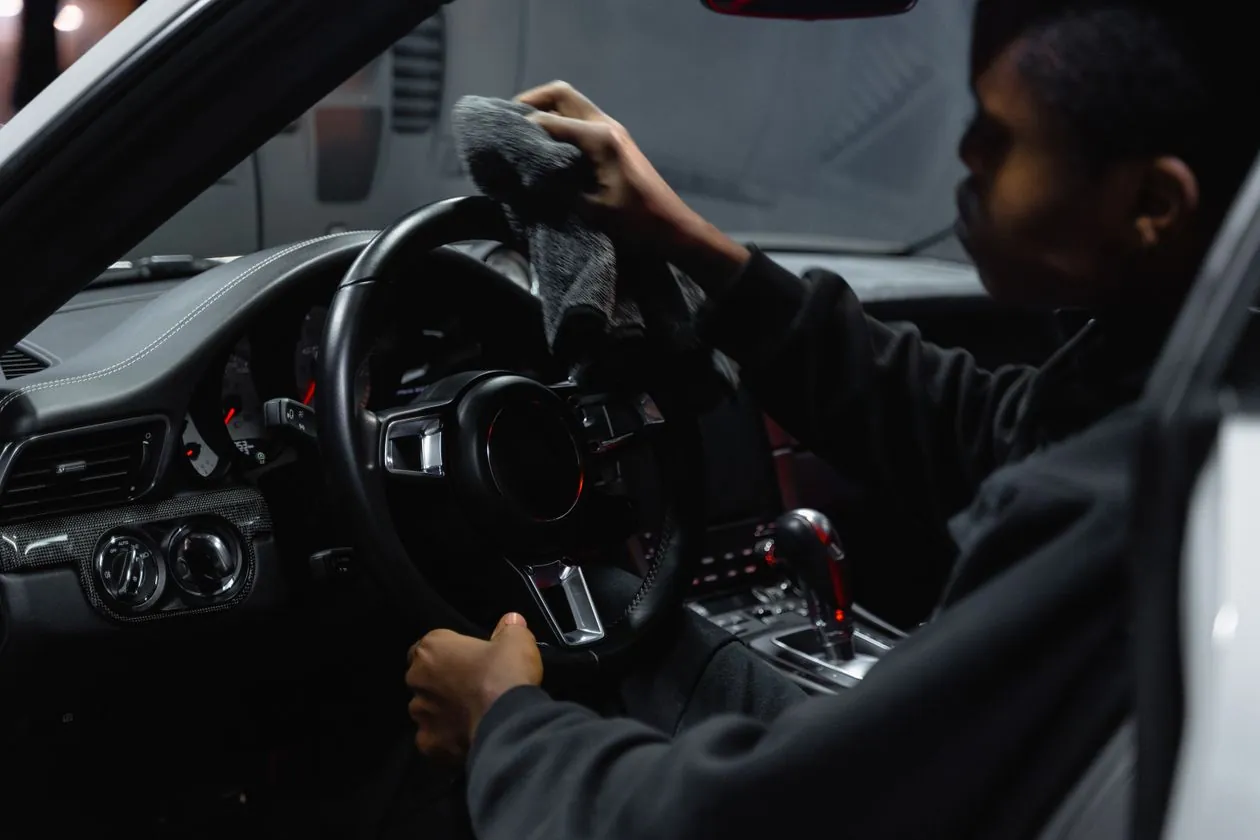
A dash needs cleaning before protecting - dust and film block protectant and bake on. In our interior details, dash and trim are cleaned and dressed with a satin-finish protectant that includes UV inhibitors: the factory look, not a wet shine. That finish matters beyond taste: greasy high-shine dressings create windshield glare, attract dust, and can make surfaces slippery - including the steering wheel, which should never be dressed slick. Reapply on the detailing rhythm, every 4–6 months, or more often for cars parked outside daily. Between details, a damp microfiber dust-off keeps the layer honest.
Tint: the permanent layer
Ceramic window tint blocks the great majority of UV and a large share of infrared heat before they enter the cabin - it protects the dash, the seats, and the people, all day, without a routine. It is a studio service (our sister studio, Illustrious Auto Boutique, installs it), and for Lowcountry cars that live outside it is the closest thing to a permanent fix for interior sun damage. Combined with a shade habit and protectant rhythm, tint is how a ten-year-old Charleston interior still looks five. Prevention is the whole game: a cracked dash cannot be detailed back - it can only be replaced or covered.
This guide is part of our interior detailing series. If your car is due, we bring this exact process to your driveway anywhere in our service areas - including Hanahan - with published package prices and a walk-around before we leave.
One last Charleston note: interiors in Hanahan rarely fail all at once - they decline a beach trip, a school run and a humid week at a time, until one day the cabin simply feels old. An interior detail on rhythm interrupts that slide while it is still cheap and gentle to reverse. If this guide described your seats, your carpets or your vents, the reset is a single visit: we bring the extraction and steam to your driveway, and the car smells like a car again by the time we leave.
Keep Reading
Related guides & the service
FAQs
Questions This Guide Answers
Can a faded dash be restored?
Fading from surface oxidation and film often improves a lot with proper cleaning and protectant. Deep UV damage - chalky, cracked vinyl - is permanent; we will tell you honestly which you have.
Are the shiny dash dressings bad?
Mostly they are cosmetic silicone that adds glare, dust attraction and a greasy feel, with minimal UV protection. A quality satin protectant with UV inhibitors is the professional choice.
Does tint really protect the interior?
Yes - ceramic tint blocks nearly all UV and much of the heat, protecting dash, seats and occupants continuously. Our Boutique studio installs it; ask us and we will coordinate.
Ready when you are
Tell us the car and where it will be - we’ll confirm your slot and bring everything with us, water and power included.