
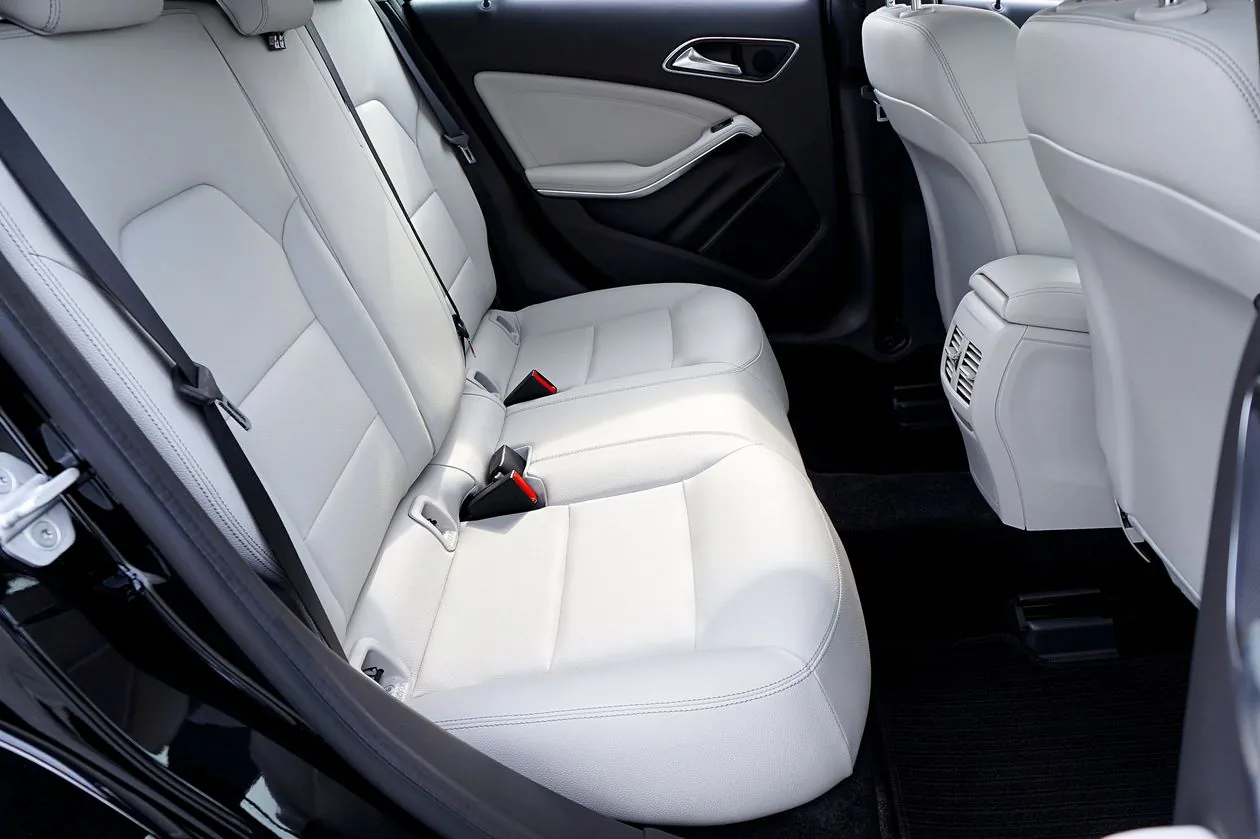
Guide · Interior Detailing
Leather Seat Care: Cleaning and Conditioning Done Right
By Trent Sloan, Illustrious Mobile Detailing · Written from how we actually do the work in Charleston, SC.
Leather seat care done right is two steps in the right order: clean first with a pH-safe leather cleaner to lift dirt, oils and sunscreen out of the grain, then condition the clean hide to replace the oils heat and UV strip away. Conditioning dirty leather seals grime in and feeds nothing - it is the most common leather mistake there is. In South Carolina, where cabin heat and sun are relentless, the rhythm is every 3–4 months, with a damp-microfiber wipe after beach days. Done on rhythm, leather stays soft and matte for the life of the car.
Key Takeaways
- Clean first, condition second - the order is the whole game
- Matte and dry to the touch = conditioned; shiny = dressed dirt
- Charleston rhythm: every 3–4 months + sunshade
- Dye transfer and sunscreen: treat fresh or live with them
Know what your seats actually are
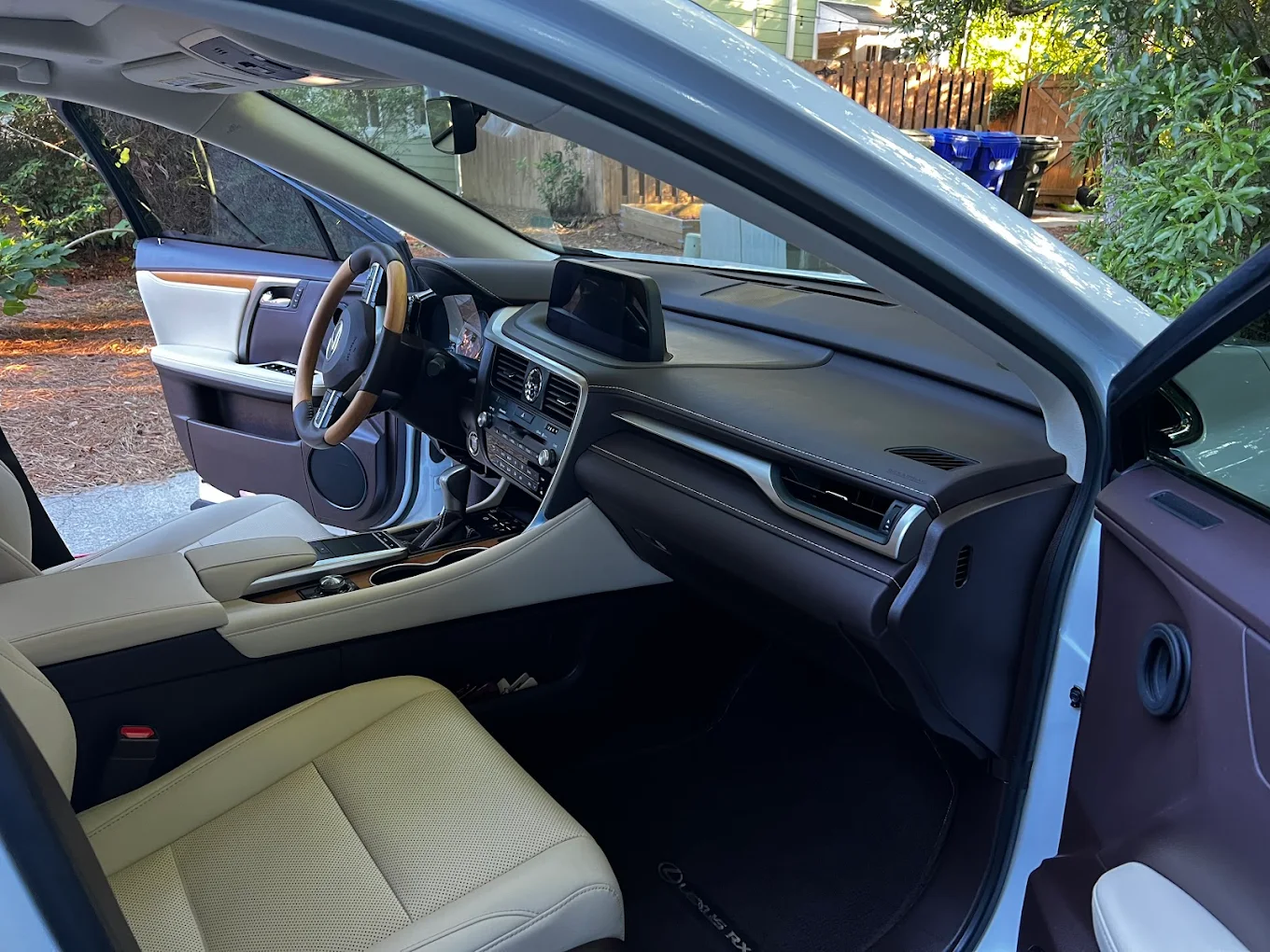
Modern car "leather" is usually one of three things: genuine leather with a protective coating (most common), full uncoated leather (rare, high-end), or leatherette/synthetic that looks the part. Care overlaps - gentle pH-safe cleaning, light conditioning - but coated leather needs less conditioner than owners apply, and perforated ventilated seats need low-moisture technique so product does not clog the perforations. The test of any product: made for automotive leather, pH-balanced, no silicones that leave a greasy shine. A shiny seat is not a conditioned seat; it is usually a dirty one with dressing on top.
The cleaning step, properly
Vacuum first - grit in the seams is sandpaper during cleaning. Work one panel at a time: cleaner on a soft brush or microfiber, gentle agitation in the grain and stitching, wipe the lifted dirt away with a clean damp cloth. Watch the cloth: on a daily driver it comes away gray-brown - that is body oil, sunscreen, denim dye transfer and ground-in dust leaving the grain. Bolsters get the most wear and the most dirt; steering wheels and armrests (often leather too) get the same treatment. Only when the wipe comes away clean is the leather actually ready for conditioner.
Conditioning: less, and on clean leather
Apply conditioner sparingly to clean leather, work it in evenly, let it dwell as directed, then buff off the excess - leather should finish matte and dry to the touch, never slick. Over-conditioning coated leather just leaves product sitting on the coating, attracting dust. The purpose is replacing the plasticizers and oils that heat drives out, keeping the hide flexible so it does not crack at the flex lines. In Charleston, a car that lives outside may want the 3-month end of the rhythm; a garaged car can run 4–6 months. Our interior detail includes both steps, in order, every visit.
Damage control: stains, dye transfer and cracks
Denim dye transfer (the blue shadow on light leather) lifts best when fresh, with proper leather cleaner and patience - scrubbing spreads it. Sunscreen and insect repellent can permanently mark coated leather if baked in heat; wipe beach-day seats the same evening. Shiny worn bolsters are usually compacted dirt - cleaning restores the matte finish surprisingly often. Cracks are the end of the road: conditioner cannot un-crack a split surface, so the entire rhythm above exists to never arrive there. If your seats feel papery or look ashy, that is the early warning - book the clean-and-condition now.
This guide is part of our interior detailing series. If your car is due, we bring this exact process to your driveway anywhere in our service areas - including Daniel Island - with published package prices and a walk-around before we leave.
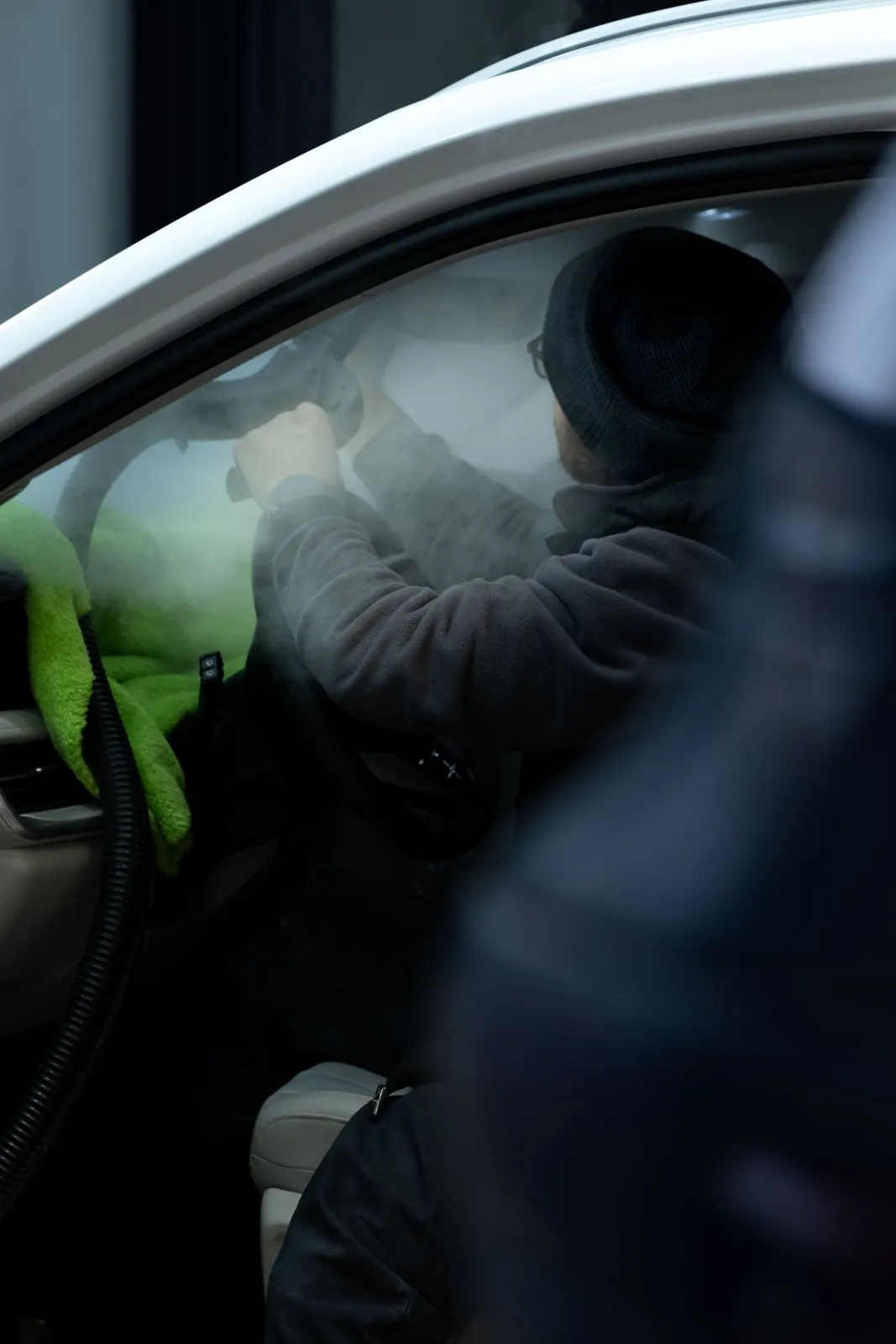
One last Charleston note: interiors in Daniel Island rarely fail all at once - they decline a beach trip, a school run and a humid week at a time, until one day the cabin simply feels old. An interior detail on rhythm interrupts that slide while it is still cheap and gentle to reverse. If this guide described your seats, your carpets or your vents, the reset is a single visit: we bring the extraction and steam to your driveway, and the car smells like a car again by the time we leave.
Keep Reading
Related guides & the service
FAQs
Questions This Guide Answers
How often should I condition leather in South Carolina?
Every 3–4 months for cars that live outside or commute daily; 4–6 for garaged cars. Match it to your detailing rhythm and it never becomes a separate chore.
Can I use household leather products or saddle soap?
Saddle soap is for saddles - it can strip automotive coatings and leave residue. Use products made for automotive leather; the chemistry of coated car leather is its own thing.
My light-colored seats have a blue tint from jeans. Can it come out?
Usually, yes - denim dye transfer responds to proper leather cleaning, especially when caught within the season. Old, baked-in transfer lightens significantly but may keep a shadow; we will assess honestly.
Ready when you are
Tell us the car and where it will be - we’ll confirm your slot and bring everything with us, water and power included.