
Guide · Mobile Ceramic Coating
What a Mobile Coating Day Looks Like, Hour by Hour
By Trent Sloan, Illustrious Mobile Detailing · Written from how we actually do the work in Charleston, SC.
A mobile coating day runs about six to nine hours for a typical car: arrival and setup, a thorough wash and clay decontamination, machine paint enhancement (the longest stage), a panel wipe, then the coating itself applied and leveled panel by panel, finishing with cure instructions. Larger vehicles and heavier paint correction extend the day or split it. The hour-by-hour below is the real rhythm of the job at your home - what we are doing, why it takes that long, and the two moments (the test panel and the final inspection) where you will want to be watching.
Key Takeaways
- Total: ~6–9 hours for a typical car, at your home
- Enhancement is the longest stage - and the result’s source
- Application is slow, quiet and panel-by-panel
- The day ends with cure rules that protect the investment
Hours 0–2: setup, wash, decontamination
We arrive with the self-contained unit, set up canopies if your space needs shade, and walk the car with you - confirming the plan against the paint in today’s light. Then the foundation work: wheels and wells, a foam soak and two-bucket wash with treated water, and clay bar decontamination across every panel. This stage looks like "just a wash" and is anything but: coating bonds to whatever it touches, so the surface must be literally bare - no wax, no sealant, no bonded grit. Rushing here is how coatings fail young, which is why a coating day starts with two unglamorous hours.
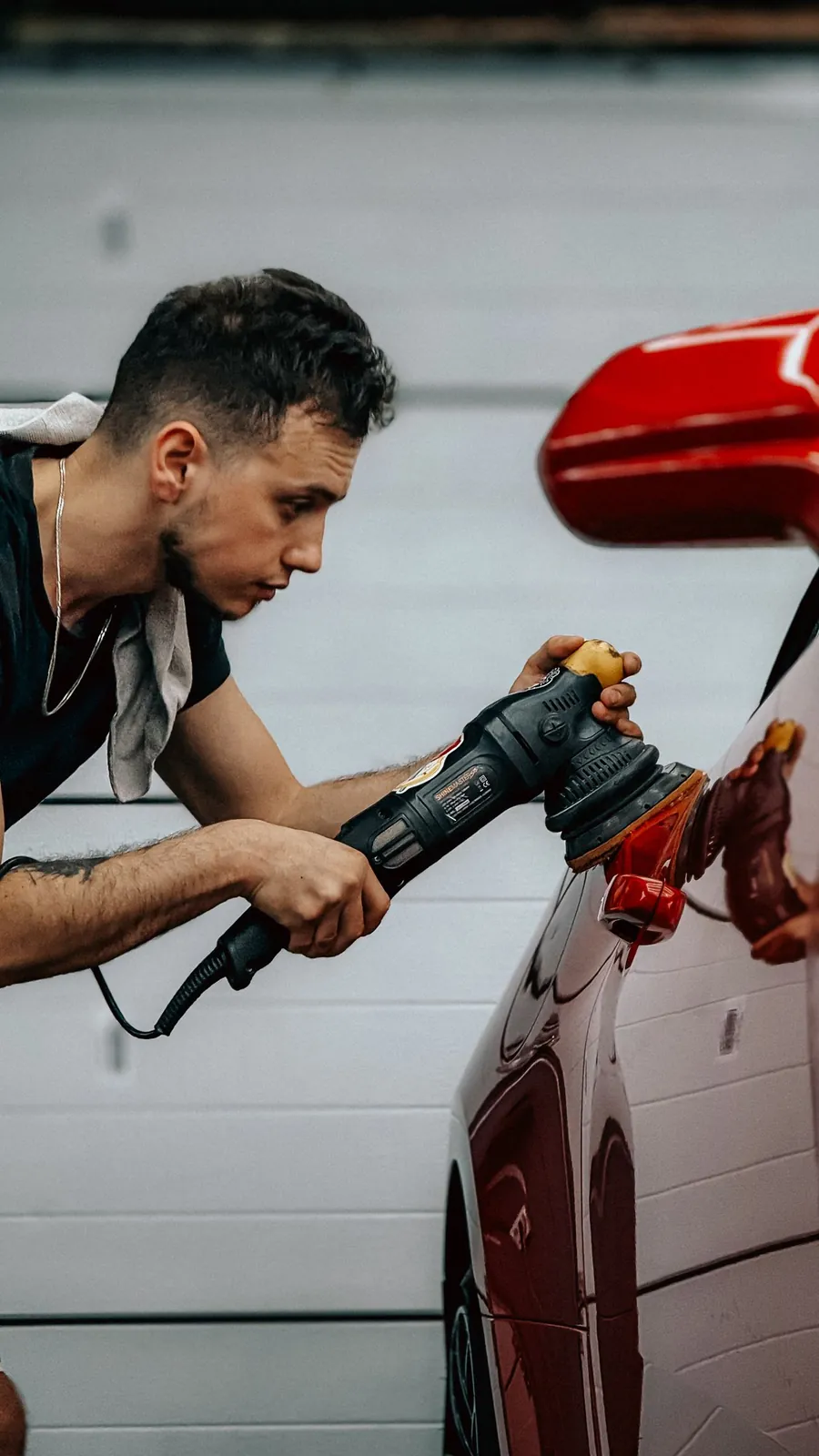
Hours 2–5: paint enhancement - the transformation
The machine polishing stage is the heart of the day and the source of the result. Working panel by panel under light, the polisher removes swirls, light scratches and oxidation, refining the clear coat to the gloss the coating will then preserve. This is where the test panel early in the stage matters: we show you the corrected section against an untouched one, so the day’s value is visible before we proceed. Time here flexes most - sound paint moves quickly; a brush-washed black SUV earns every minute. Owners who watch one panel transform tend to understand the entire coating industry by the end of this stage.
Hours 5–7: panel wipe and application
Polishing leaves oils that would block bonding, so every panel is wiped with a dedicated panel-prep solution until it squeaks clean. Then the coating: applied in small, overlapping sections with an applicator, allowed to flash for the product’s specified window, and leveled with microfiber - panel by panel, with inspection under light for high spots as we go. This stage is quiet, slow and unforgiving of interruption, which is why the environment (shade, calm air) was arranged in hour zero. Wheels and glass are finished, trim is dressed, and the car begins to look like itself on its best day ever.
Hour 7+: cure briefing and handover
The job ends with the part that protects your investment: a clear cure briefing. You get the exact rules for your coating - how long the car stays dry and parked (typically through the first night and beyond), when the first wash is allowed, what to do if weather threatens, and the maintenance rhythm that keeps the coating at full behavior for years. We photograph the finished car, walk it with you in the light, and leave the written guidance behind. The car then sits in your driveway doing the easiest part of the whole process - curing - while already looking like the best-kept vehicle on the street.
This guide is part of our mobile ceramic coating series. If your car is due, we bring this exact process to your driveway anywhere in our service areas - including Isle of Palms - with published package prices and a walk-around before we leave.
One last Charleston note: coating decisions in Isle of Palms are really parking decisions. A car that sleeps in a garage can afford almost any protection strategy; a car that lives outside under Lowcountry sun and salt air cannot afford a weak one. If this guide matched your car’s life, the free inspection is the correct next step - twenty minutes at your home, your paint under proper light, and a written quote with the reasoning attached. No pressure either way: if a sealant rhythm serves you better, that is what we will recommend.
Keep Reading
Related guides & the service
FAQs
Questions This Guide Answers
Do I need to be home all day?
No - be there for the start walk-around and ideally the finish; the middle is ours. Many owners work from home through a coating day and only surface for the test panel and the reveal.
What if my car needs more correction than one day allows?
Then the inspection says so before coating day: heavy correction becomes a studio job or a two-day plan. We never compress correction to fit a coating schedule - the paint sets the timetable.
When can I drive the car?
After the initial cure window we specify - usually the car can be driven the next day, with the full rules (no washing yet, avoid chemical exposure) still applying for the period in your written guidance.
Ready when you are
Tell us the car and where it will be - we’ll confirm your slot and bring everything with us, water and power included.