
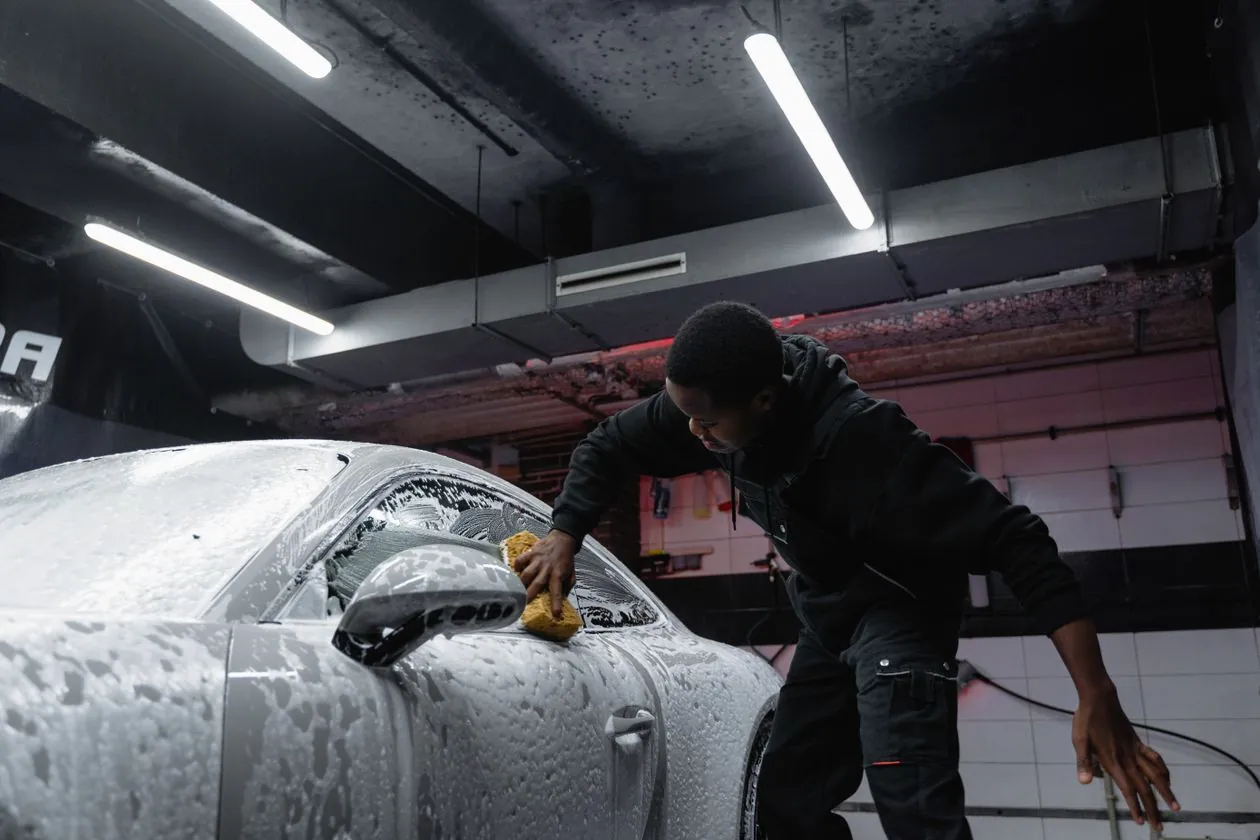
Guide · Exterior Detailing
The Two-Bucket Wash: How the Pros Wash Without Swirls
By Trent Sloan, Illustrious Mobile Detailing · Written from how we actually do the work in Charleston, SC.
The two-bucket wash is how professionals wash a car without scratching it: one bucket of soapy water, one of clean rinse water, and the mitt is rinsed in the clean bucket - with a grit guard at the bottom - before it ever returns to the soap. Every swirl mark on every car came from grit dragged across paint, and this simple discipline is what breaks the cycle. Add a foam pre-soak, wash top-down in shade, and dry with clean microfiber, and you have the exact contact-wash process we use - the difference between washing a car and detailing its exterior starts here.
Key Takeaways
- Swirls come from grit in the wash, not from washing itself
- Soap bucket + rinse bucket + grit guard: the whole secret
- Wheels get separate tools - brake grit never touches paint
- Drying installs as many swirls as washing: microfiber, no pressure
Where swirls actually come from
Swirl marks are not caused by washing; they are caused by contaminated washing. A mitt picks up grit from a lower panel, then drags it across the hood. A single bucket makes it worse: the mitt returns the grit to the same water, reloading for every panel, so by mid-car you are washing with liquid sandpaper. Automatic brush tunnels industrialize the problem - the brushes hold every previous car’s grit. The evidence is on every daily driver in Charleston: circular micro-scratches visible in sun, worst on dark colors. The cure is not a product. It is keeping grit and paint apart, which is a process discipline.
The method, step by step
Set up: two buckets, grit guards in both if you have them, quality car shampoo in one, clean water in the other, separate mitts or a mitt plus a dedicated wheel brush. Rinse the car thoroughly first - or foam it and let it dwell - to float off the loose load. Wash one panel at a time, top to bottom (the roof is cleanest; the rockers are filthiest and go last), using straight lines and light pressure. After each panel: rinse the mitt in the clean bucket, scrub it against the grit guard, then reload from the soap bucket. Wheels get their own tools entirely, and they are done first or last, never mixed into the paint sequence.
Drying: the forgotten half
More swirls are installed during drying than washing, because a dragged dry towel on dusty paint is pure abrasion. Dry with plush, clean microfiber - blot and glide, never press and scrub - or blow the water off with air if you have it. Use a drying aid or quick detail spray as lubricant on the towel pass. And the water itself matters: in Charleston, letting a car air-dry in sun is a water-spot installation service, since our mineral-rich water etches as it evaporates. Our mobile units carry treated, spot-free water and dry every panel by hand; it is slower, and it is the whole point.
Honest limits of the home wash
A perfect two-bucket wash is still a wash: it does not remove bonded contamination (clay does), it does not protect (sealant does), and it does not correct the swirls already there (polishing does). Its job is maintenance without damage - holding the line between details. If your car already carries years of brush-tunnel swirls, the sequence is: professional paint enhancement to remove them, then your two-bucket discipline to never reinstall them. Most owners who learn the method enjoy it; those who do not, book us - the process in your driveway is the same one, with the clay and sealant wrapped around it.
This guide is part of our exterior detailing series. If your car is due, we bring this exact process to your driveway anywhere in our service areas - including Folly Beach - with published package prices and a walk-around before we leave.
One last Charleston note: exterior damage in Folly Beach is almost never an event - it is an accumulation. Salt films, pollen crusts and sap spots each add a layer, and the paint declines quietly until a wash stops making it look clean. That is the signal this guide is about: when washing stops working, decontamination and protection are due. Booked on rhythm, an exterior detail keeps every layer thin and removable; booked late, the same work becomes restoration. The rinse habits in this guide carry the weeks between.
Keep Reading
Related guides & the service
FAQs
Questions This Guide Answers
Do I really need two buckets? Is one with a grit guard enough?
One bucket with a guard is better than none, but the rinse bucket is what actually isolates the grit - the mitt sheds its load in clean water before reloading. Two buckets is the standard because it works.
What soap should I use?
A pH-neutral car shampoo - never dish soap, which strips wax and sealant and dries trim. Quality shampoo’s lubricity is part of the swirl defense, not a luxury.
How often should I wash at home?
Every one to two weeks for a daily driver in Charleston, weekly near the beach or in pollen season - always gently, and always as maintenance between details, not instead of them.
Ready when you are
Tell us the car and where it will be - we’ll confirm your slot and bring everything with us, water and power included.