
Guide · Exterior Detailing
Water Spots on Glass and Paint: Causes and Cures
By Trent Sloan, Illustrious Mobile Detailing · Written from how we actually do the work in Charleston, SC.
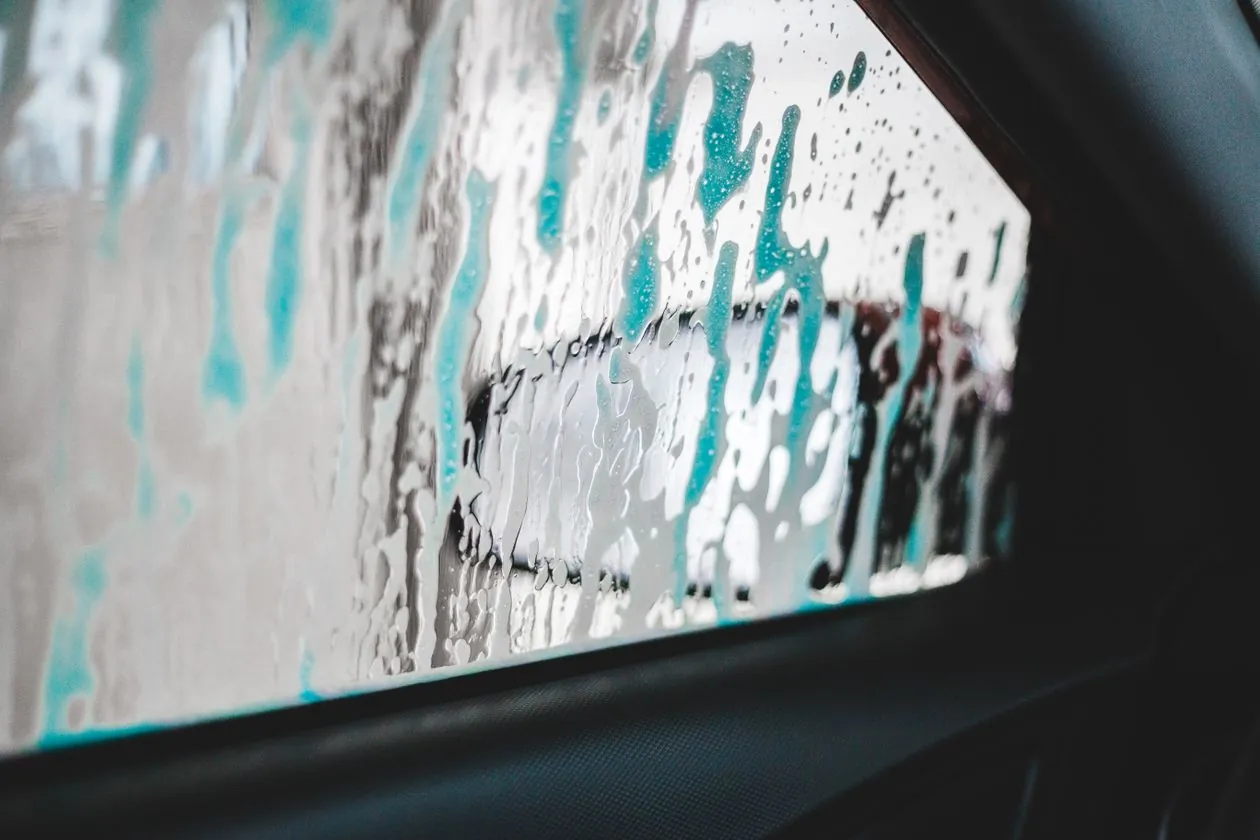
Water spots are mineral deposits: when hard water dries on paint or glass, it leaves its calcium and magnesium behind as a crusty ring - and in Charleston heat, the minerals plus sun can etch those rings into the surface. Fresh spots are a cleaning problem (a detail, sometimes just a proper wash and dry). Etched spots are a polishing problem. The prevention is boring and total: dry the car after washing, never let sprinklers baptize it, and keep a sealant layer between minerals and paint. Our mobile units carry treated, spot-free water for exactly this reason.
Key Takeaways
- Spots are minerals: fresh = cleaning, etched = polishing
- Charleston water + July sun = an etching machine
- Sprinklers are the number-one repeat offender
- Dry the car, keep sealant fresh, park out of the arc
Why Charleston water spots so aggressively
Municipal water across the Lowcountry is mineral-rich, and our summer sun is an evaporator: a wet car in July heat dries in minutes, concentrating minerals at each droplet’s edge. The result is the familiar ring map on hoods, roofs and glass. Two aggravators are local specialties: irrigation sprinklers, which dose parked cars with untreated water daily in many neighborhoods, and beach-adjacent parking, where salt spray dries into the same kind of deposit with corrosive interest. Glass shows spots worst because it is perfectly smooth and transparent - but paint etches deeper, because clear coat is softer than glass.
Fresh spots vs etched spots
The distinction decides the cure. Fresh deposits sit on the surface: a proper wash, a dedicated water-spot remover (mildly acidic, dissolving the minerals), or clay during a detail removes them fully. Etched spots have eaten into the surface - the ring you feel after the deposit is gone is a tiny crater in the clear coat or a pit in the glass. On paint, light etching polishes out with paint enhancement; on glass, etching is largely permanent short of specialized glass polishing, which is why prevention on windshields matters. The test: clean the area properly. If the ghost of the ring remains and catches a fingernail’s attention, it is etched.
The professional treatment ladder
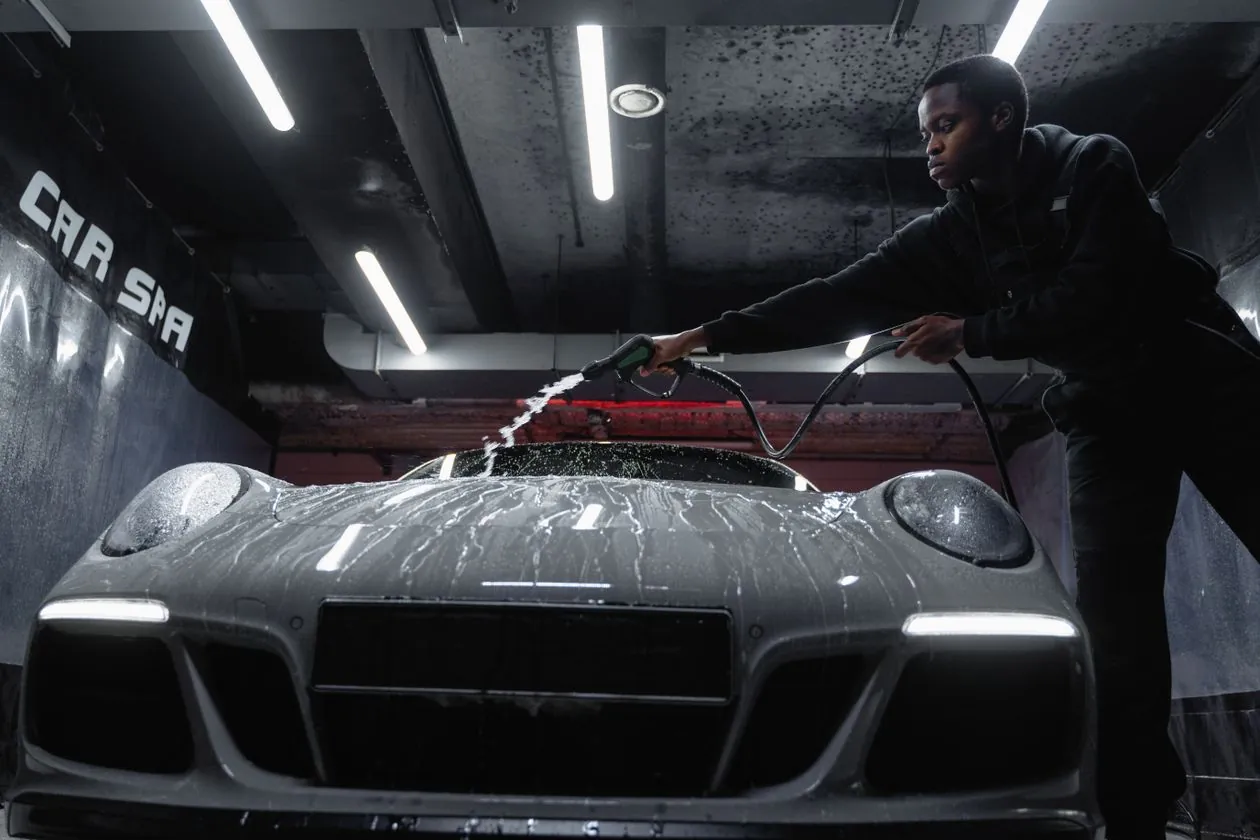
In a detail, spots are handled in order: wash and dry properly (with treated water, so we add none of our own), spot-remover chemistry on the deposits, clay for the stubborn mineral fraction, then sealant - because a protected surface both resists spotting and releases deposits before they etch. If etching is present on paint, we show you and quote paint enhancement honestly rather than burying it under wax. For sprinkler-dosed cars, the fix also includes the parking conversation: one car-length away from the irrigation arc is worth more than any product we sell.
Prevention: the drying discipline
Ninety percent of water spots are a drying failure. Wash in shade when you can; dry immediately with clean microfiber; never let a washed car air-dry in summer sun. If sprinklers hit your car at home, rinse and dry it that morning or adjust the sprinkler heads - daily dosing defeats every defense eventually. Keep protection fresh: sealant makes spots form on the coating layer, where they clean off easily, instead of on bare clear coat. And if you use an automatic wash, choose the spot-free rinse option - it exists precisely because final-rinse water quality decides the spots.
This guide is part of our exterior detailing series. If your car is due, we bring this exact process to your driveway anywhere in our service areas - including Johns Island - with published package prices and a walk-around before we leave.
One last Charleston note: exterior damage in Johns Island is almost never an event - it is an accumulation. Salt films, pollen crusts and sap spots each add a layer, and the paint declines quietly until a wash stops making it look clean. That is the signal this guide is about: when washing stops working, decontamination and protection are due. Booked on rhythm, an exterior detail keeps every layer thin and removable; booked late, the same work becomes restoration. The rinse habits in this guide carry the weeks between.
Keep Reading
Related guides & the service

FAQs
Questions This Guide Answers
Can vinegar remove water spots?
Household vinegar dissolves fresh mineral deposits and detailers use purpose-made equivalents with safer, controlled acidity. On etched spots vinegar does nothing - the deposit is gone and the crater remains. And never let acids dwell on paint or trim.
My windshield is spotted so badly I can barely see at night. Fixable?
If the spots are deposits, yes - professional glass decontamination restores clarity. If years of deposits have etched the glass, improvement is possible but perfection may not be. We assess before promising.
Why do you bring your own water?
Because treated, spot-free water cannot leave mineral deposits. Detailing a car with hard tap water in Charleston heat would install the very problem we are removing.
Ready when you are
Tell us the car and where it will be - we’ll confirm your slot and bring everything with us, water and power included.