
Guide · Exterior Detailing
Pollen Season: Protecting Your Paint in Spring
By Trent Sloan, Illustrious Mobile Detailing · Written from how we actually do the work in Charleston, SC.
Charleston’s spring pollen - the yellow-green blanket from pines and oaks - is more than ugly: wetted by dew and baked by sun in daily cycles, it bonds to paint, and wiped off dry it acts as an abrasive that scratches. Protecting paint through pollen season is a sequence: enter spring with fresh sealant on decontaminated paint, rinse (never dry-wipe) during the peak weeks, and book the post-season clay detail that strips the bonded residue. Cars that run this sequence come out of spring with their finish intact; cars that get dry-wiped and ignored come out swirled and crusted.
Key Takeaways
- Pollen bonds with dew + sun cycles; dry pollen scratches
- Enter spring sealed: pollen releases from sealant in a rinse
- Peak rule: rinse only - never dry-wipe, dust or brush
- Post-season clay detail strips the welded residue
What pollen actually does to paint
Pollen grains are spiky microscopic structures designed by evolution to cling - to bees, and unfortunately to clear coat. Dry, they sit loose and mostly harmless. The damage cycle starts with moisture: dew or light rain wets the layer, sun bakes it, and the grains’ organic compounds bond into a paste that hardens on the surface. Repeated cycles build the familiar crust that a normal wash will not fully remove. Meanwhile the grains themselves are abrasive: any dry contact - a hand, a duster, a brush wash - drags them across the paint and writes fine scratches. Pollen season is thus two problems at once: a bonding problem and a scratching problem, with opposite temptations.
Enter spring protected
The single most effective move happens before the peak: a detail with clay decontamination and fresh sealant in late winter or early spring. Sealant changes the physics of the season - pollen bonds to the sacrificial layer weakly and releases in a rinse, instead of welding to bare clear coat. Cars that enter pollen season bare spend it accumulating the crust directly on the paint. If you only detail twice a year in Charleston, the spring appointment is the one to protect: schedule it ahead of the yellow weeks, which in the Lowcountry can arrive as early as February in a warm year.
During the peak: rinse, never wipe
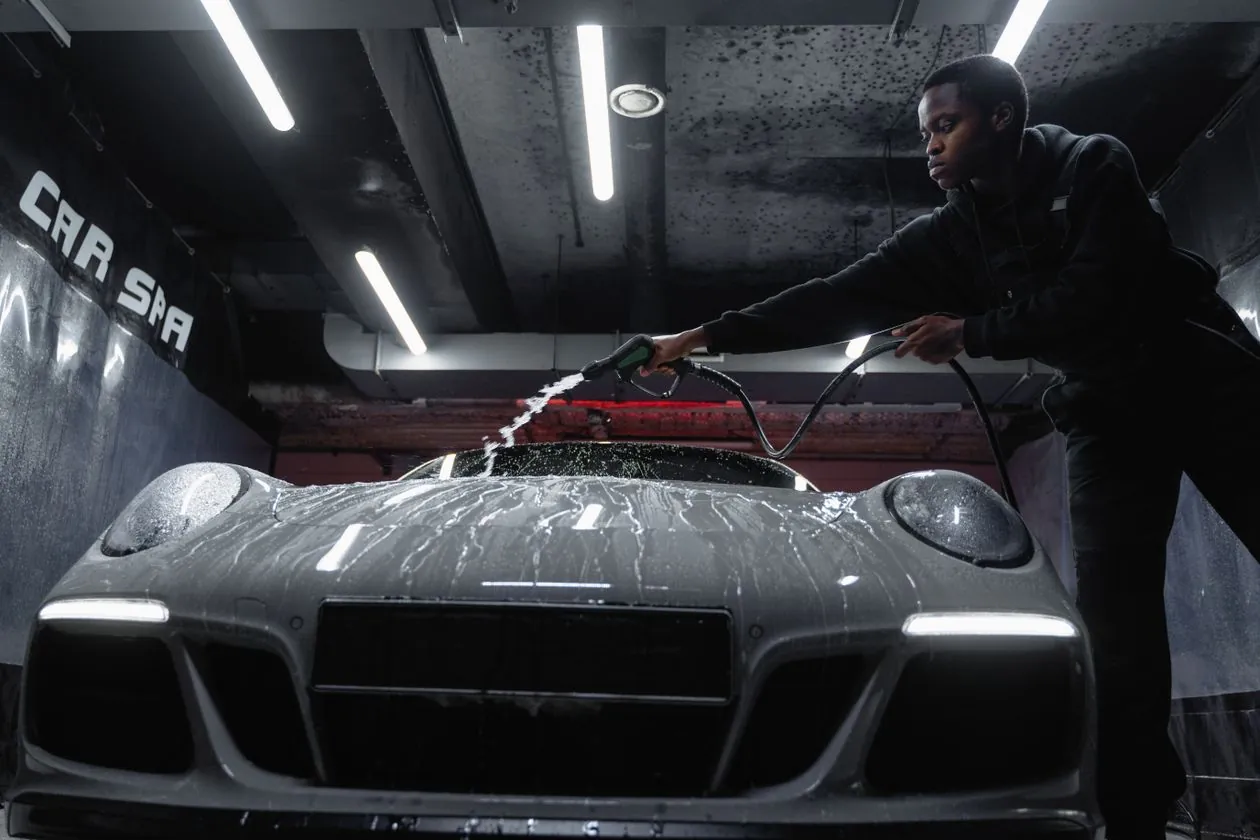
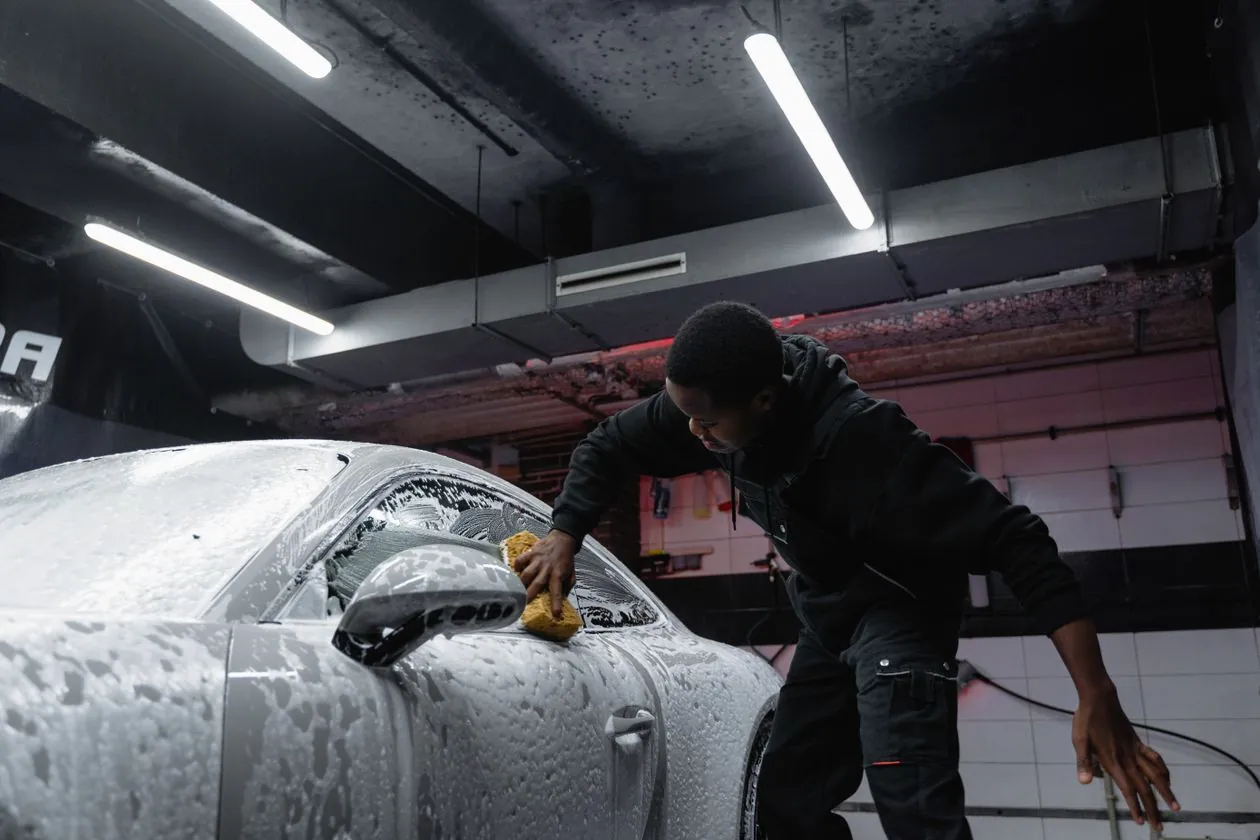
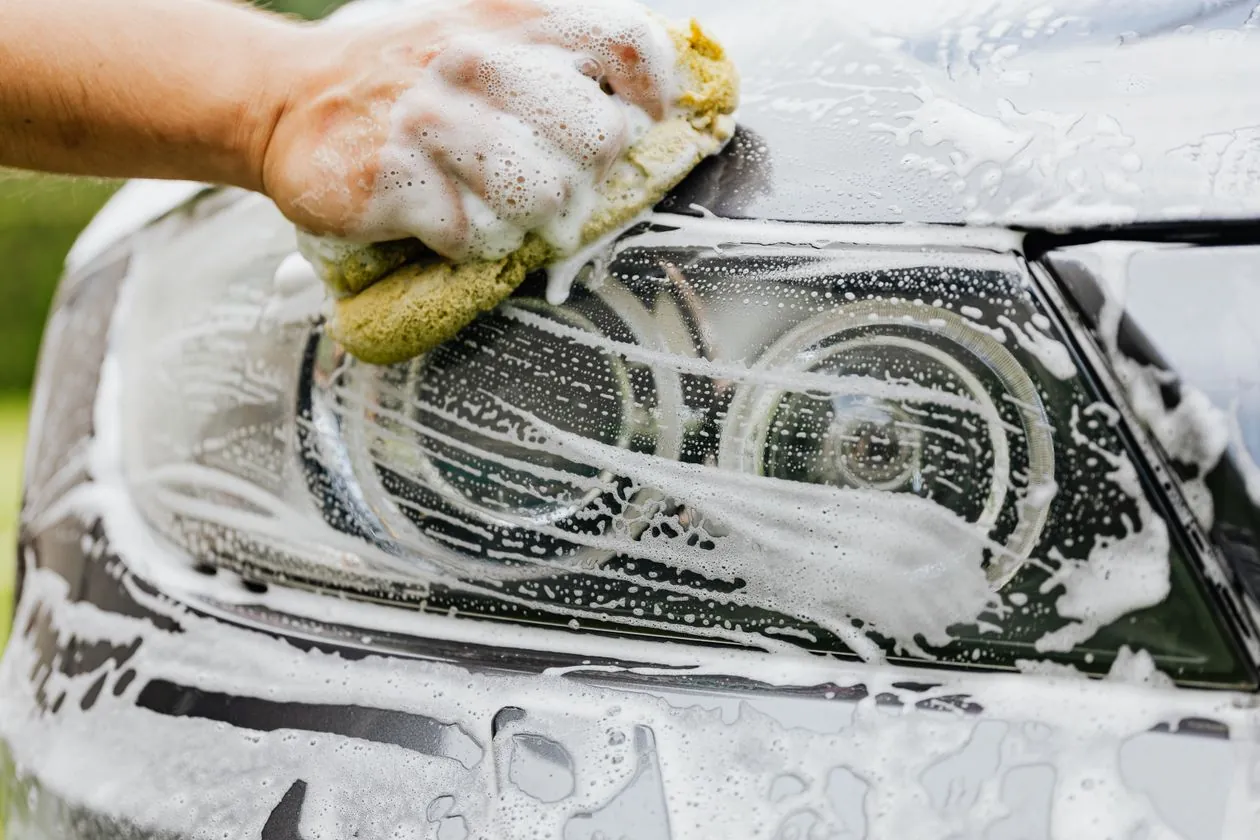
The rule is absolute: never dry-wipe, dust or brush pollen off a car. Every dry contact scratches. Instead, rinse with a hose - the water floats the loose layer off without dragging it - and let the car air-dry or, better, rinse and drive; perfection is not the goal during peak weeks, non-damage is. If you wash properly, foam first and let it dwell, so the mitt meets a floated, lubricated surface. Windshield visibility is the safety exception: clean glass with plenty of water and a squeegee or soaked microfiber, never a dry blade across a pollen-caked windshield. Garage or cover when possible on the worst days; a single peak week outdoors can deposit the whole season’s crust.
After the peak: the clay reset
When the yellow weeks end, the bonded fraction remains - the car looks clean after a wash but feels rough, and that roughness is pollen residue welded through a season of dew-and-bake. The post-season detail (wash, clay, sealant) strips it and re-arms the paint for summer’s lovebugs and UV. This is the most-booked exterior appointment in our Charleston calendar, and for good reason: it is the difference between a car that ages one spring and a car that ages five. Book it as the season breaks rather than when you notice the crust - the calendar fills exactly then.
This guide is part of our exterior detailing series. If your car is due, we bring this exact process to your driveway anywhere in our service areas - including Sullivan's Island - with published package prices and a walk-around before we leave.
One last Charleston note: exterior damage in Sullivan's Island is almost never an event - it is an accumulation. Salt films, pollen crusts and sap spots each add a layer, and the paint declines quietly until a wash stops making it look clean. That is the signal this guide is about: when washing stops working, decontamination and protection are due. Booked on rhythm, an exterior detail keeps every layer thin and removable; booked late, the same work becomes restoration. The rinse habits in this guide carry the weeks between.
Keep Reading
Related guides & the service
FAQs
Questions This Guide Answers
Is pollen actually damaging, or just dirty?
Both: the grains are abrasive when dragged dry, and the baked residue bonds and dulls paint. The damage is slow and cumulative - which is why the seasonal sequence, not panic, is the answer.
My car is yellow every morning. Should I wash it daily?
Rinse it if you like - water is safe - but skip daily full washes. A rinse floats the loose layer; the bonded fraction waits for the post-season clay. Save your effort for not wiping it dry.
When exactly is Charleston pollen season?
Pine and oak pollen typically peak from late February through April, varying with the warmth of the year, with a smaller fall season. Watch the cars: when every hood wears yellow by morning, you are in it.
Ready when you are
Tell us the car and where it will be - we’ll confirm your slot and bring everything with us, water and power included.